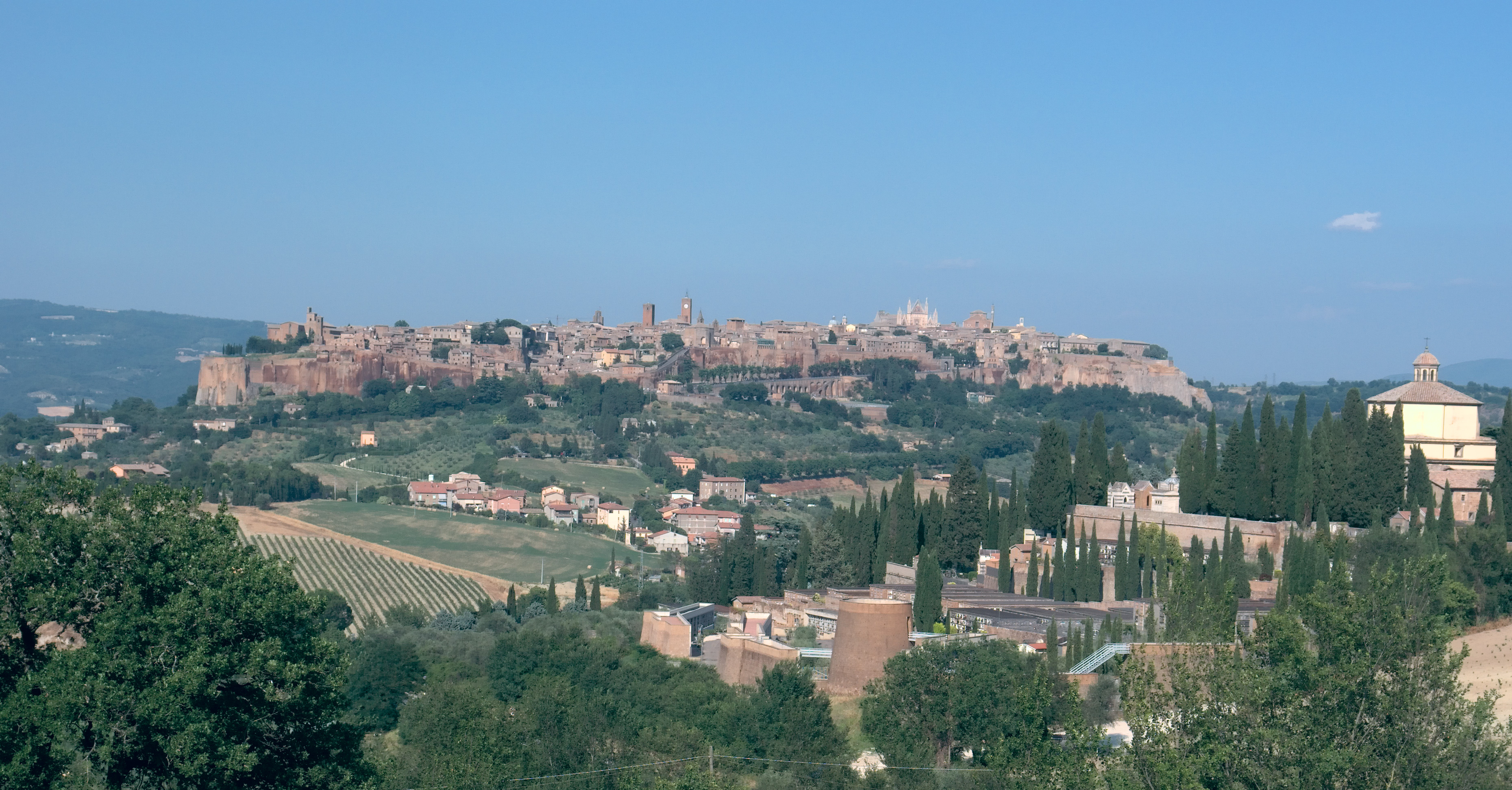
Every Saturday afternoon, the sacristan at the Chiesa di Sant'Andrea in a Umbrian hilltown southwest of Foligno spends roughly forty minutes assembling the following week's parish bulletin. The process involves a word processor, a photocopier set to A5, and a folding machine purchased second-hand from a print shop that closed in 2017. The resulting four-page sheet — the foglio parrocchiale — is placed in the entrance to the church every Sunday morning. Approximately 180 copies are distributed. The parish has been producing this document, in various formats, since 1947.
This particular bulletin is not unusual in its continuity. Across rural Italy, the parish newsletter occupies a documentary position that its modest format understates. In hundreds of comuni where no municipal archive has been digitised, where the local weekly paper ceased publication before 2005, and where social media arrived too late to capture events from the preceding decades, the unbroken series of bound fogli parrocchiali held in the sacristy represents the most complete written record of community life available.
What parish bulletins actually contain
The content structure of contemporary Italian parish bulletins, based on an examination of 62 active publications from Umbria, southern Tuscany, and the Sabine hills of Lazio, follows a consistent pattern:
- Liturgical calendar and Mass schedules — the nominal purpose, but rarely more than one page
- Birth, baptism, and death notices — typically including names, dates, and brief biographical notes that do not appear elsewhere in print
- Parish financial reports — quarterly summaries of income from collections and extraordinary donations
- Association notices — Caritas, Azione Cattolica, youth groups, women's groups, and in several comuni, the local branch of the Civil Protection volunteers
- Letters from the parish priest — commentary on local and national events that, in smaller comuni, constitutes the nearest equivalent to an editorial opinion column
- Historical notes — irregular but significant: anniversary accounts of local events, biographical sketches of former residents, transcriptions of early 20th century records
The death notices deserve particular focus. In the bulletins examined, the format is consistent: full name, age, occupation or former occupation, surviving immediate family, date of death, and in approximately 40% of cases, a paragraph of personal recollection — often written by the priest, occasionally by a family member. This information is not systematically recorded anywhere else. Italian civil death records held by municipalities become accessible after 70 years, but they contain no biographical detail. The bulletin entry is frequently the only narrative account of a life in a small rural community.
The bulletin as a substitute for missing institutions
Italian press history records a period of intense parish bulletin activity in the postwar decades, particularly in the 1950s and 1960s, when many rural comuni lacked not only a local paper but any formal channel for community-wide written communication. The Unione della Stampa Periodica Italiana (USPI), which maintains the largest registry of Italian periodical publications, lists over 6,000 active parish bulletins as of its 2023 database update, making the parish bulletin category larger than the combined total of registered local weekly and fortnightly newspapers.
In communities where the municipal administration has been merged with a larger neighbouring comune — a process accelerated by Italy's fusioni comunali policy from 2010 onward — the parish bulletin has in several documented cases become the primary voice of the former municipality's distinct identity. The bulletin of a dissolved comune in the Valnerina notes in each edition the historical boundaries of the original municipality, publishes records from the former municipal council, and maintains a correspondence section in which former and current residents exchange information about the community's past.
"The council meetings stopped. The mayor's office moved 22 kilometres away. The bulletin is still here every Sunday." — Resident of a merged comune in southern Umbria, August 2023
The question of preservation
The archival condition of parish bulletins varies considerably. Larger, wealthier parishes in urban or semi-urban comuni — Assisi, Spoleto, Orvieto — maintain bound annual volumes of their bulletins in climate-controlled storage accessible to researchers. The Archivio Diocesano di Perugia-Città della Pieve holds complete series for 34 parishes, with the oldest continuous collection beginning in 1923.
In smaller and more isolated communities, the situation is more precarious. Several parishes visited during field research between 2022 and 2024 stored back issues in cardboard boxes in the sacristy, unbound and unindexed. Water damage from a 2016 earthquake was cited in three cases as the cause of partial or total loss of runs from the 1970s and 1980s. Two priests described having discarded older copies when the storage space was needed — an irreversible loss of material that, by their own account, had never been duplicated or photographed.
The Catholic Church's national digitisation initiative, coordinated through the Italian Episcopal Conference (CEI), has prioritised manuscript archives and records predating the 20th century. Parish bulletins — too recent to be considered historical, too ephemeral to be catalogued alongside formal sacramental registers — fall outside its scope. Several dioceses in Umbria and Lazio have begun informal scanning projects, but without dedicated funding or standardised metadata, the resulting digital files are not searchable and often inaccessible beyond the diocese that created them.
The bulletin and local journalism: points of overlap
The boundary between a parish bulletin and a community newspaper is not always clear. In comuni where no secular local press exists, the foglio parrocchiale has expanded to fill gaps: reporting on municipal budget decisions, publishing the names of scholarship recipients, covering local cultural festivals in detail that the regional daily would not allocate space for. This expansion is not without friction. Several parish priests interviewed noted that residents sometimes approach them with requests to publish items that are politically contentious — disagreements over planning decisions, criticisms of the local administration — and that navigating those requests while maintaining the bulletin's non-partisan character requires ongoing judgment.
The question of what the bulletin is — religious document, community newsletter, civic archive, or some combination of all three — is not merely academic. It affects how the material is preserved, who considers it their responsibility to maintain it, and whether it will exist in any accessible form in fifty years.
Sources
- USPI — Unione della Stampa Periodica Italiana, periodical registry 2023
- CEI — Conferenza Episcopale Italiana, archive and digitisation guidelines
- FamilySearch — Italy Church Records overview
- Archivio Diocesano di Perugia-Città della Pieve — parish bulletin holdings catalogue (2023 edition)
- Field research: 62 active parish bulletins examined, Umbria, southern Tuscany, Sabine hills of Lazio, 2022–2024